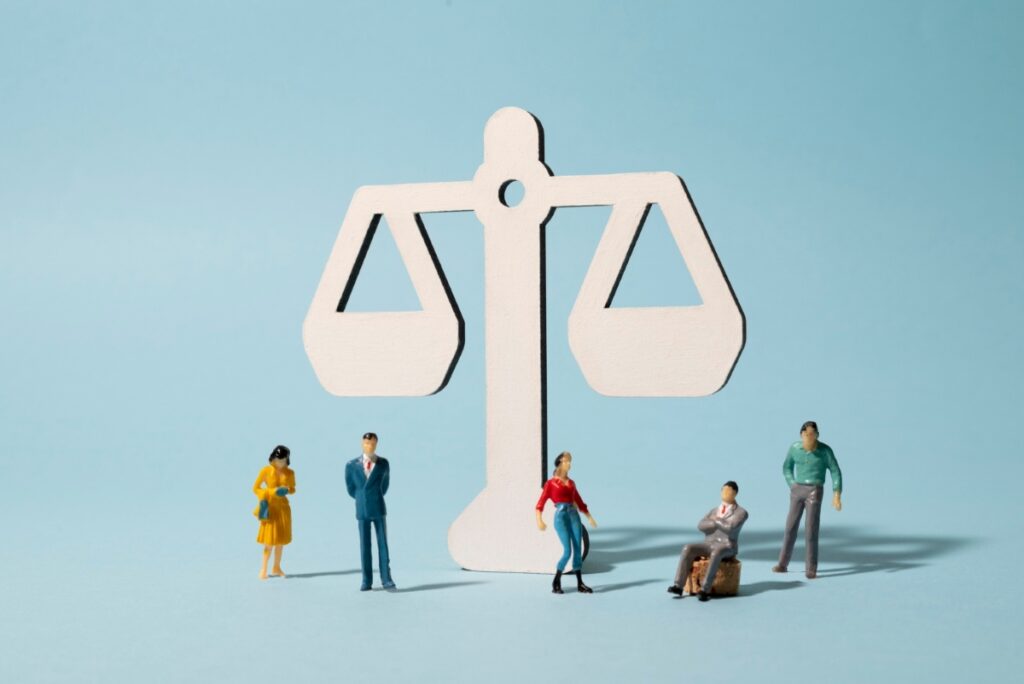
What are biases and why is it important to identify them? Biases are a tendency to like or dislike something, someone, or a group in a way that is unfair or warped. Biases can be conscious or unconscious. Biases often form in childhood by picking up on the subtle or not so subtle comments and actions primary caregivers make against different groups of people, and can easily turn into a value system with discrimination based on those biases.
When people think about identifying biases, they usually think about cultural or gender biases first. Judging groups of people based on their religious beliefs/customs or their sexual orientation has been discussed at great length since people became “woke”, and obvious cultural and gender biases are displayed throughout the world in different unjust ways.
For example, my Father immediately disliked anyone German because he was Jewish and Hitler was German. My Grandmother had a not-so-nice Yiddish word for anyone of African/African American descent despite being persecuted herself in the Holocaust for being Jewish. My Aunt and Uncle disliked anyone who wasn’t Jewish, displaying what I considered reverse-discrimination against 98% of the population.
I remember as a young child thinking that all those beliefs seemed unfair and unwarranted, and expressing my opinion to each of them at the time. To deaf ears. Very black and white all or nothing thinking in my family, which always contradicted my colorful soul. Besides those obvious faux pas, though, my Father, Grandmother, and Aunt also taught me to treat people better than you expect to be treated in return and the unconditional love I was missing at home. May they all rest in peace. I miss them every day.
I have personally dealt with cultural biases throughout my life being Jewish, and have listened to and laughed along with countless cruel Jew-jokes throughout the years while pretending not to be offended. I remember in high school omitting my Jewish heritage with certain groups of people who would have immediately judged me for it, and feeling ashamed of my heritage because of it.
Looking back, it makes me sad that I never felt proud to be part of a group of people who were persecuted against and continued to thrive in the face of adversity. Nowadays, I share the knowledge I’ve gained about Judaism with anyone who appears curious about it, and feel proud to be part of a controversial culture most people know nothing about. For knowledge is power, and it’s not right to discriminate against a group of people due to cultural biases based on ignorance.
Identifying biases is important in creating a safe environment where people feel free to express their thoughts and beliefs, while being open to listening without judgement to others’ express their own unique thoughts and beliefs. There are many types of biases I could have written about, but chose to focus on confirmation bias, selection bias, anchoring bias, attribution bias, cultural bias, gender bias, and media bias because I have personally seen those biases appear while facilitating groups and as an educator in general. A lot of times without people realizing they had biases in the first place.
Confirmation bias is favoring information that confirms existing beliefs, meaning you believe the information that agrees with what you already already think and ignore facts that go against your opinions. For example, there are certain religious groups that think if you don’t believe in their higher power, your afterlife will be condemned to Hell. These groups don’t accept different religions or cultures, yet they want different religions and cultures to accept their religion and culture. Mind boggling if you ask me.
Selection bias is selecting certain pieces of information or groups of people that are more likely to give you the results you are looking for. For example, most psychology studies are conducted with different test groups of people selected to participate in the study. Which means, in general, they don’t use data from the “real world,” they use data from willing participants. This can skew the results of certain data because the general population is a melting pot of different childhood experiences, genders, and backgrounds. Don’t believe everything you read, believe what you witness firsthand.
Anchoring bias is believing the first thing you see and/or hear as the whole truth. Do you believe that if something is expensive it is automatically better? Or that certain groups of people are smarter or better looking because it’s how they are advertised in society? What about believing every instagram or facebook picture posted with a smile is someone living their best life? These are all examples of anchoring biases you might not have realized you had.
Attribution bias is explaining someone’s behavior based on stereotypes or assumptions, and it’s one I constantly see occurring in subtle or not so subtle ways. For example, do you believe Mexicans are hard-workers and Jewish people are frugal with money? Do you believe people of Asian descent are good at math and men are better with directions than women? These are all examples of stereotypes created by society that apply to some people within those groups, but certainly not all people within those groups. Personally, I am Jewish and give as much as I can to people less fortunate. I am also a woman who is horrible with directions. Don’t judge a book by its cover, because you might miss out on the amazing content inside!
Media bias is sharing information as facts that are based on one point of view. I think most people realize that the news mainly reports on negative, controversial subjects from their perspective, and some news channels are more reliable than others. “Fake news” is a term coined from the media embellishing or altering information about current events to create a better story for the viewers. We see this all the time on countless internet platforms as well, and it’s scary to think how many people turn feelings into facts when they should be checking the source instead.
It’s easy to get caught up in a narrative when we have access to an unlimited supply of information at our fingertips. Remember, everything you read on the internet is true. Even if you read the exact opposite pieces of information from multiple sources, they are all true. That’s my sarcastic way of warning people to learn through experiences and not from your next YouTube thread. Especially nowadays with AI at our disposal, which can create something from nothing with minimal human effort.
Knowledge is power and ignorance is not bliss. I mention that a lot in my articles because it’s worth repeating. You can’t change until you recognize there is a problem, and identifying generational problems isn’t something you can do alone. You need to find like-minded people who align with your values and can validate your feelings. It’s not always easy going against the crowd to stand alone in the rain, but it’s worth it when your people end up finding you with hot pink umbrellas and leopard print rain boots!
Do what you love and leave the rest, you are worth it!
Chelle B; LADC and founder of 3hotgirlshealing.com