
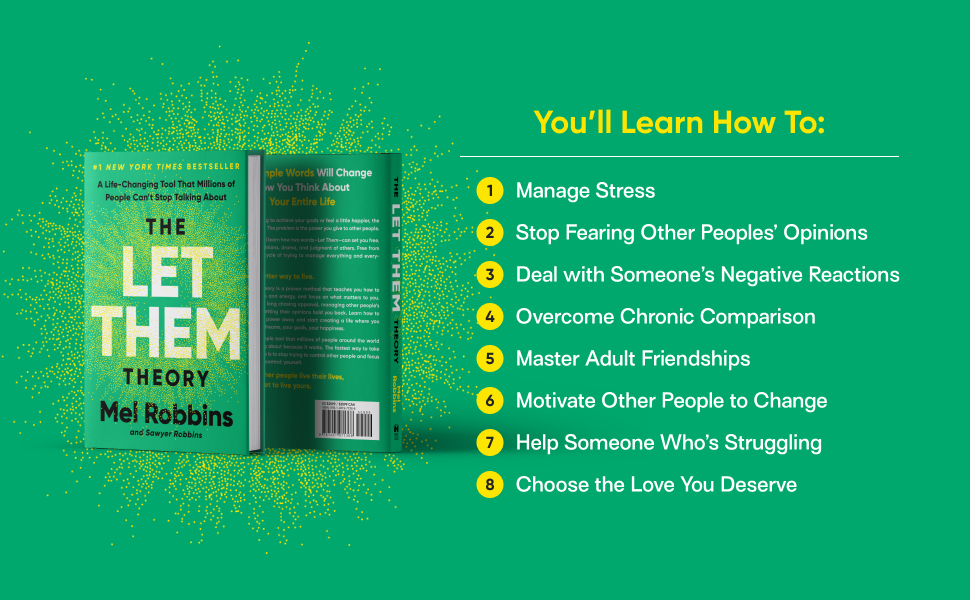
In The Let Them Theory, Mel Robbins presents a simple but powerful concept that has the potential to transform how we navigate relationships, expectations, and emotional boundaries. The premise of the book can be summed up in two short phrases: “Let Them” and “Let Me.” While the idea itself is straightforward, Robbins expands it into a mindset that encourages readers to release control over other people and refocus their energy on their own choices and personal growth.
The book explores a common human struggle—the desire to control how others behave, think, or treat us. Robbins argues that much of our stress, frustration, and emotional exhaustion comes from trying to manage things that are ultimately outside of our control. Instead of chasing approval or attempting to fix others, she encourages readers to practice acceptance. When someone behaves in a disappointing or frustrating way, the response is simple: let them. By doing so, we stop investing energy into situations we cannot change and begin reclaiming our peace.
A major strength of the book is its accessibility. Robbins writes in a conversational tone and uses everyday examples from work, friendships, family dynamics, and romantic relationships. These relatable stories help illustrate how the “Let Them” mindset can be applied in real-life situations. The concept is easy to remember and can serve as a quick mental reset during moments of stress or conflict.
For many readers, the book’s message may be especially meaningful for women. Women are often socialized to be caretakers, problem-solvers, and emotional managers within their families and communities. As a result, they may feel responsible for maintaining harmony, meeting others’ expectations, or constantly proving their worth. Robbins’ philosophy challenges this pattern by encouraging women to release the pressure of controlling other people’s reactions or opinions. Instead, the focus shifts inward—toward self-respect, healthy boundaries, and personal empowerment.
From a healing and recovery perspective, the ideas in The Let Them Theory also echo familiar principles found in many wellness and recovery communities. The concept of accepting what we cannot control and focusing on our own actions aligns with the broader practice of surrender, accountability, and emotional self-regulation. In this way, Robbins’ framework offers readers a practical tool for protecting their emotional energy and maintaining balance in relationships.
While some readers may find the core idea simple enough that it could have been expressed in fewer pages, the strength of the book lies in how effectively Robbins reinforces and applies the concept across different aspects of life. Her examples help readers recognize patterns of overthinking, people-pleasing, and emotional overinvestment that many struggle with daily.
Overall, The Let Them Theory offers a clear and empowering reminder: we cannot control other people, but we can control how we respond. By practicing the mindset of “Let Them” and “Let Me,” readers can begin to release unnecessary stress and focus more fully on their own growth, boundaries, and well-being.
For readers seeking a practical, empowering perspective on relationships and personal peace, The Let Them Theory provides a simple but impactful approach to letting go—and moving forward.
— Review by Chelle B.