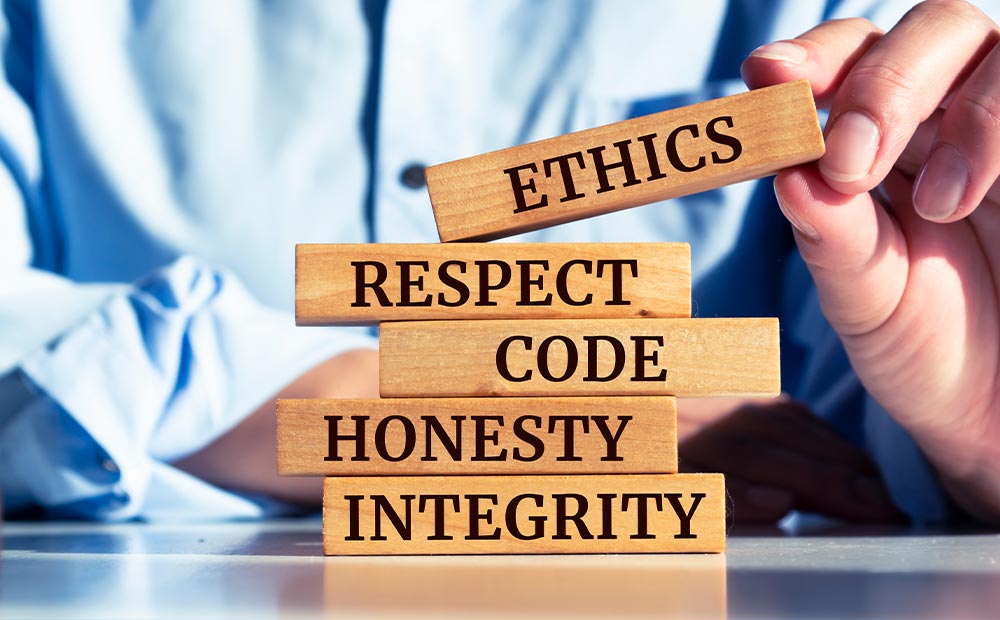
The topic of this week is ethics, which are the moral principles, values, and guidelines that help individuals, organizations, and societies determine what is right, fair, responsible, and respectful. Ethics shape how people make decisions, how professionals act, and how communities function. More simply put, ethics are the standards for how we should behave toward ourselves, others, and the world.
First and foremost, I wanted to point out that everyone has a different code of ethics that is determined by how they grew up, where they grew up, who they surround themselves with, and personal values they develop throughout their own formative and later years. Don’t judge someone else’s ethical standards unless you have walked a mile in their shoes, because personal experiences throughout life shape people’s ethics, and personal ethics can change through life experiences.
In today’s world where it’s easier to believe what you hear/read instead of what you witness firsthand, it’s especially important to discuss the ethical implications that are affecting society as a whole. Especially with the addition of AI unconsciously controlling our thoughts by providing information without experiences.
There are many different types of ethics, but I am choosing to focus on personal ethics, professional ethics, societal ethics, cultural ethics, clinical/medical ethics, and environmental ethics because they are the ones I have the most experience with. Please keep in mind that I knowingly don’t know everything and have lived limited experiences personal to me. Everyone is different, so everyone should have different opinions on things. Disagreeing with someone’s opinion does not have to be a confrontation. It can just be a conversation between two people who view the world through different lenses.
Personal Ethics are individual moral values and beliefs that guide personal behavior and decisions. They protect the safety and rights of others, promote fairness and respect, build trust, support responsible decision-making, strengthen professional integrity, and encourage social stability. Moral values are the guidelines that shape our sense of right and wrong. Some examples of moral values that influence our personal ethics include honesty, integrity, respect, responsibility, compassion, fairness/justice, courage, loyalty, self-discipline, and humility. If any of those stand out to you as more important than others, those moral values are more important to you personally.
There are no “better” or “worse” personal moral values, they are just part of what makes you unique and special. Don’t judge what one person finds valuable and try to change it, instead find people who match the qualities you find valuable and validate them. If you grew up without money, it would make sense that you value self-discipline over compassion. If you grew up wealthy, it would make sense that you value loyalty over humility. But remember, just because things make sense doesn’t necessarily make them true. Stay true to yourself most importantly, despite what you think “makes sense” to those around you.
Personally, I value respect, compassion, and humility more than I value fairness/justice, self-discipline, or responsibility. Probably because I spent most of my life in Minnesota feeling disrespected by the covert narcissists who surrounded me, which gave me more compassion for helping others identify toxic relationship patterns and provided me a humility I never thought possible. But that’s just me psycho-analyzing myself. The moral values that make up my personal ethics have drastically changed throughout the years with experience and growth, and continue to be open for interpretation.
Professional Ethics are standards and guidelines set by a profession to ensure proper conduct, consistency, and protection of the public. Basically, the rules and expectations set by a profession to ensure safe and responsible practice. Personally, professional ethics are a very important part of my profession as a Licensed Alcohol and Drug Counselor (LADC), and ultimately guide how I interact with clients and co-workers on a daily basis. I try to stay open-minded and non-judgemental while maintaining my professionalism in an authentic way, which isn’t always easy in a field that’s subjective to interpretation and filled with ethical dilemas.
Professional Ethics look different for different types of occupations, and each workplace has a different code of ethical obligations. For example, a mechanic’s professional ethics look different than a therapist’s professional ethics, because their jobs entail very different skills and interactions with the clients they serve. I advise everyone to learn what the professional ethics look like in their prospective careers, and make sure they align with your personal ethics. It’s very difficult to work in a profession that doesn’t align with your personal ethics, and it’s always easier to work smarter not harder.
Societal Ethics are shared moral values within a community or society that shape norms and expectations for behavior. This includes treating people fairly regardless of their background and promoting equality and human rights. The world is very diverse and unique, and societal ethics look different depending on where you are located and can vary depending on the culture and/or community you live in.
For example, Thailand has very different societal ethics than America. In Thailand, societal ethics revolve around communities helping each other and elder respect. In America, the societal ethics seem to be more focused on not offending anyone and keeping to yourself. Very different lifestyles from very different cultures. Traveling to and learning about other countries can help you learn different societal ethics, while helping you expand your knowledge and gain tolerance for people’s differences.
Cultural Ethics are similar to societal ethics, but differ based on religion, customs, and traditions of a group of people within the society. They are values rooted in cultural traditions, heritage, and community expectations. For example, some cultural ethics for Judaism include keeping kosher, observing Shabbat and other Jewish holidays, and being part of a congregation at your local synagogue. Cultural ethics for Catholicism include attending confession, spreading the word of Jesus, and giving back to the church. Whatever your cultural ethics consider important should be an important part of your identity within the culture. At the same time, you don’t need to observe everything in your culture to embrace it.
I can’t stress this enough when talking about cultural ethics, that different does not mean wrong. It just means different. Be tolerant and become an active learner about different cultures you don’t understand. The best way to overcome fear is through education, and immersing yourself in someone else’s culture can be a great way to learn tolerance and acceptance for things you don’t understand. If you don’t understand something, don’t be afraid to ask clarifying questions. Learn from each other to help make the world a more compassionate place.
Clinical/Medical Ethics are the ethical principles governing healthcare providers in their treatment of patients. This includes respecting a patient’s right to make their own choices, acting in the patient’s best interest, and “do no harm.” Clinical/Medical Ethics guide physicians and other professionals in the health care fields to make decisions for their patients that protect their human rights. Examples include obtaining informed consent, maintaining confidentiality, and avoiding unnecessary procedures.
Informed consent is a process where a person agrees to a medical procedure or participates in research after being given all relevant information, including the nature, risks, benefits, and alternatives. This is when a clinician makes sure whoever is receiving the medical intervention is aware of the potential dangers and hopeful advantages before the patient agrees to whatever research or procedure they are having done. This may require doctors to use interpreters and meet patients where they are at intellectually. If you don’t understand something your doctor is trying to explain, ask clarifying questions until you do.
Maintaining confidentiality is also important because your privacy is protected by laws and statutes that keep irrelevant people from hearing details about your life they have no business knowing. In the addiction counseling and medical fields, confidentiality is important to avoid stigmas and gossip that could easily happen without this mandated protection in place. Avoiding unnecessary procedures in the medical field sounds obvious, but unfortunately it happens more often than people want to believe by shady doctors who don’t share the whole truth in order to benefit financially or obtain a certain status in their field. I’m not saying don’t trust doctors because most of them are providing services within the clinical/medical ethical guidelines. I’m saying to ask clarifying questions for anything you don’t understand or doesn’t sound right to you.
The last type of ethics I wanted to discuss are Environmental Ethics, which are the moral principles guiding how humans interact with the natural world. Basically, respecting Mother Earth and what we are doing to protect Her. Some examples of ways people value environmental ethics are by recycling, cutting down on plastic bags and unnecessary garbage that ends up in landfills, using solar panels and electric cars, and cleaning up after yourself and/or others when you are out in nature. There are many ways to help protect the Earth, but as long as everyone does their part it’s possible. The little things make a big difference, and everyone’s contribution matters.
Common ethical problems in society today include dishonesty and lack of accountability, corruption and abuse of power, discrimination and inequality, misinformation and manipulation, breach of privacy, exploitation in the workplace, environmental neglect, conflicts of interest, lack of professional boundaries, and inconsistency in ethical standards. If the topic of ethics interests you and you want to do your part to make the world a more ethical place, learn what you can do with your role as either a provider or a patient and teach others what you learn. Knowledge is power and ignorance is not bliss. Together we can make the world a kinder place!
Do what you love and leave the rest. You are worth it!!
Chelle B, LADC and founder of 3hotgirlshealing.com